The Sheffield Shield explained
Six states, four-day matches and a five-day final: how Australia's first-class cricket competition has worked since 1892-93.
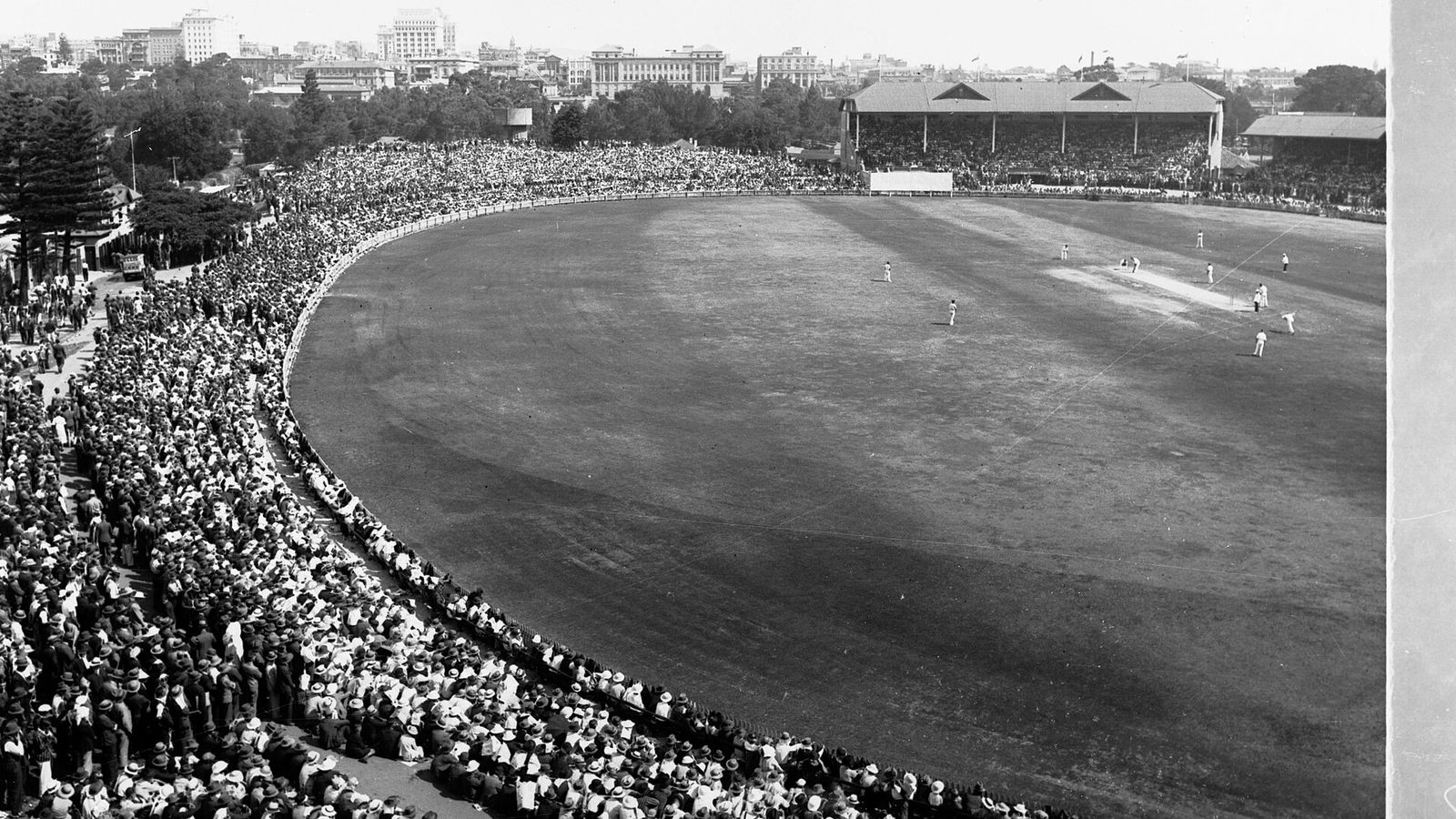
The Sheffield Shield is Australia's first-class domestic cricket competition. The six states play each other in four-day matches across the summer, and the two best teams meet in a five-day final. It is the level directly below Test cricket, and Test players turn out for their states when the international schedule allows.
The competition dates from 1892-93, when New South Wales, Victoria and South Australia played the first season.
The six teams
Each team represents a state. Several play at more than one home ground, using the big Test venue for some matches and a smaller ground for others.
| Team | Home grounds | First Shield season |
|---|---|---|
| New South Wales | Sydney Cricket Ground, Cricket Central | 1892-93 |
| Victoria | Melbourne Cricket Ground, Junction Oval | 1892-93 |
| South Australia | Adelaide Oval, Karen Rolton Oval | 1892-93 |
| Queensland | The Gabba, Allan Border Field | 1926-27 |
| Western Australia | Perth Stadium, WACA Ground | 1947-48 |
| Tasmania | Bellerive Oval | 1977-78 |
The three founding states played alone for more than thirty years. Queensland joined in 1926-27 but did not win the Shield until 1994-95. Western Australia came in after the Second World War, and Tasmania became the sixth team in 1977-78, winning its first title in 2006-07.
When it is played
The Shield runs through the whole cricket summer, from early spring to early autumn. The 2025-26 season began on 4 October 2025 and ended with the final, played from 26 to 30 March 2026.
How a match works
A Shield match is first-class cricket, the same format as a Test. Each side can bat twice, there is no limit on overs per innings, and a team wins by scoring more runs across its two innings while bowling the opposition out twice. Regular matches are scheduled for four days. If the team batting last has not been bowled out and has not reached its target when time runs out, the match is drawn.
Some matches are played as day/night fixtures. In 2025-26 the competition also used a new rule allowing teams to replace a player during a match because of injury or concussion.
How the points work
The teams play each other twice, once at home and once away, so each side has ten matches in the regular season. Points are awarded for the result, with bonus points on top.
| Result | Points |
|---|---|
| Win | 6 |
| Tie | 3 |
| Draw or abandoned | 1 |
| Loss | 0 |
Bonus points are earned in the first 100 overs of each side's first innings. A batting side gets 0.01 of a point for every run it scores above 200 in that period. A bowling side gets 0.1 of a point for every wicket it takes in the same period. The bonuses are small on their own but add up over a season, and they reward teams that push for a result instead of batting for a draw.
If two teams finish level on points, the one with more outright wins goes ahead. After that, teams are separated by quotient, a measure based on runs and wickets for and against.
The final
Since 1982-83 the top two teams on the table have played a final over five days, at the home ground of the team that finished first.
A five-day match can still end in a draw. From 1982-83 to 2017-18, a drawn or tied final went to the team that finished top. Since 2018-19, a drawn or tied final is decided on first-innings bonus points, so both teams have something to play for from the first morning.
The 2025-26 final was played at Junction Oval in Melbourne. South Australia beat Victoria, who had finished top of the table, by 56 runs. It was South Australia's fifteenth title and the first time they had won the Shield in consecutive seasons.
Where the name comes from
The trophy is named after Lord Sheffield. After the English tour of Australia in 1891-92 he donated £150, and the money paid for the Shield. The competition has carried sponsors' names at times. It was the Pura Milk Cup from 1999 and then the Pura Cup, ran as the Sheffield Shield presented by Weet-Bix from 2008-09, and was the Marsh Sheffield Shield from 2019-20. As of 2024-25 it has no naming sponsor and is simply the Sheffield Shield again.
The record books
New South Wales have won the Shield 47 times, far more than any other state. South Australia's 2025-26 title was their fifteenth. Tasmania and Queensland, the later arrivals, both had to wait decades for a first win.
The One-Day Cup
The same six states also play a 50-over competition, which many fans still call the Marsh Cup or Marsh One-Day Cup after its sponsor from 2019-20 to 2023-24. Since 2024-25 it has been known simply as the One-Day Cup, with the winners receiving the Dean Jones Trophy. It has run every summer since 1969-70 and is now a single round-robin followed by finals.
Western Australia have the most one-day titles, with 17. New South Wales won the 2025-26 edition, their thirteenth.
For the shorter format played by city teams, see our guide to the Big Bash League. For where the Shield fits among everything else on in summer, see the Australian sports calendar.
Spotted a mistake? Email [email protected] and we will correct it.