State of Origin explained: NSW v Queensland
Rugby league's biggest rivalry picks players by where they started, not where they play. How Origin began in 1980 and how it works now.
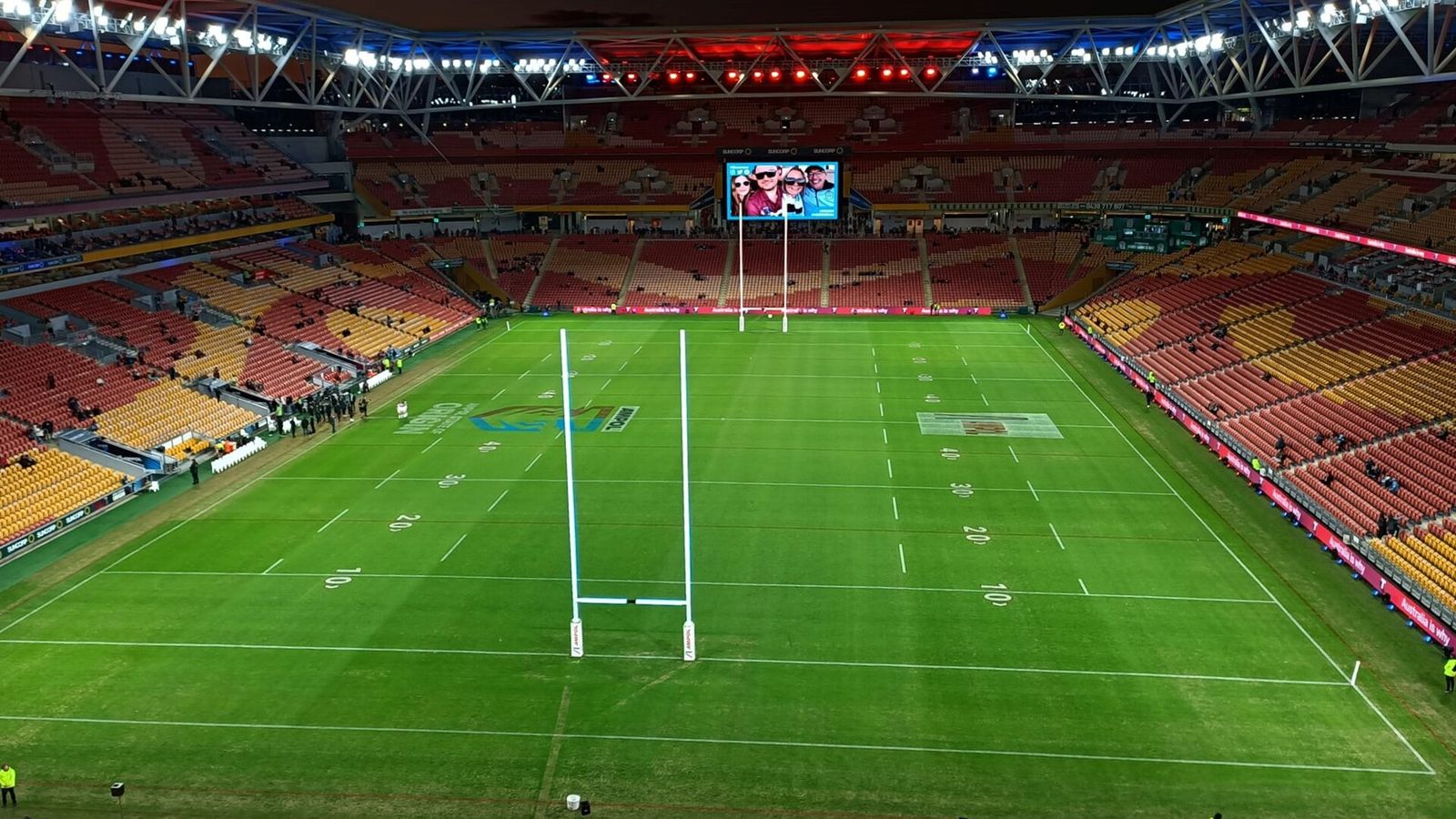
State of Origin is an annual rugby league series between New South Wales and Queensland. The men's competition has been a best-of-three series since 1982, and the two states play for the State of Origin shield. New South Wales wear blue and are known as the Blues. Queensland wear maroon and are the Maroons.
The series is played around the middle of the rugby league season, so the best NRL players leave their clubs for a few weeks to face each other in state colours.
Why Origin exists
Before 1980, interstate teams were picked from the clubs in each state. That suited New South Wales. Queensland's economy was smaller, and its clubs could not match the poker machine revenue of the Sydney clubs, so most of Queensland's best players moved south. Once there, they were no longer available to Queensland.
Interstate football lost much of its prestige through the 1970s. In 1977 the New South Wales Rugby Football League declined to host Queensland, and both games that year were played in Queensland.
Former Queensland captain Jack Reardon was the first to suggest that Queenslanders playing in Sydney should be available to their home state. Journalists Hugh Lunn, Barry Maranta and Wayne Reid helped convince the Queensland Rugby League chairman, Ron McAuliffe, to back the idea.
The first games
In 1980 Queensland lost the first two interstate games under the old rules. A one-off "State of Origin" match followed on 8 July at Lang Park in Brisbane, and Queensland won 20-10 in front of a sell-out crowd of 33,210.
The 1981 series used the old rules for the first two games and origin rules for the third, which Queensland won 22-15. From 1982 all three games were played under origin rules, and the best-of-three series began.
In 1987 the two sides also played an extra game in Long Beach, California. New South Wales won it 30-18, and the Australian Rugby League classified it as an official match in 2003.
Who can play for which state
Players represent the state they come from, not the one they live in. A player is picked for the state where he played his first senior rugby league. Under an agreement reached in 2012, other factors such as place of birth can also count.
Players must be eligible to represent Australia as well. A restriction on players who had been capped by New Zealand or England was repealed in 2026.
How the series works
Three matches are played each year. The first state to win two takes the series.
Drawn series used to happen. The 1999 and 2002 series both finished level, and in each case the state that already held the shield kept it. Drawn matches have since been ruled out. If scores are level at full time, golden point decides the game.
Since 2004 the Wally Lewis Medal has gone to the player of the series from either state. From 1992 to 2003 it was awarded only to the best Queensland player.
Where it is played
The two main venues are Lang Park in Brisbane, now called Suncorp Stadium, and Stadium Australia in Sydney, now Accor Stadium. Lang Park has hosted far more Origin games than any other ground. The third game in a series often goes to a neutral city. The Melbourne Cricket Ground, Perth Stadium and Adelaide Oval have all hosted games in recent years. The 2025 series was played at Suncorp Stadium, Perth Stadium and Accor Stadium.
Before Stadium Australia opened, New South Wales played home games at the Sydney Cricket Ground from 1982 to 1987 and the Sydney Football Stadium from 1988 to 1998.
Records and runs
Queensland have had the better of the series overall. Their best stretch came between 2006 and 2013, when they won eight series in a row, and they won 11 of the 12 series from 2006 to 2017. The biggest winning margin in Origin is 46 points, from Queensland's 52-6 win in Game III of 2015.
New South Wales won the 2026 men's series, with games drawing an average crowd of 74,436.
| Year | Milestone |
|---|---|
| 1980 | First State of Origin match, Lang Park, Queensland win 20-10 |
| 1981 | Third interstate game played under origin rules |
| 1982 | First full best-of-three series under origin rules |
| 1987 | Extra game in Long Beach, California, won by New South Wales |
| 1999 | First drawn series; first women's interstate match |
| 2006 to 2013 | Queensland win eight series in a row |
| 2012 | Place of birth added to eligibility |
| 2018 | Women's game rebranded as State of Origin |
| 2024 | First three-game women's series |
Women's State of Origin
The women's fixture was first played in 1999 as the Women's Interstate Challenge. Queensland won the first match 16-6 in Brisbane. From 2005 the winner received the Nellie Doherty Cup.
The game came under the State of Origin brand for the 2018 season, and a shield replaced the cup. For most of its history it was a single match, although two games were played in 2004, 2008 and 2023. It became a three-game series for the first time in 2024, the same format as the men's.
The Nellie Doherty Medal has been the player-of-the-match award since 2018 and has gone to the player of the series since 2023. New South Wales won the 2026 women's series 3-0, and Yasmin Meakes of the Newcastle Knights was named player of the series.
For how the NRL season itself is decided, see our NRL finals explainer.
Spotted a mistake? Email [email protected] and we will correct it.