How the AFL finals system works
The AFL ran a final eight for 26 seasons, then added a wildcard round in 2026. Here is how every week of September works.
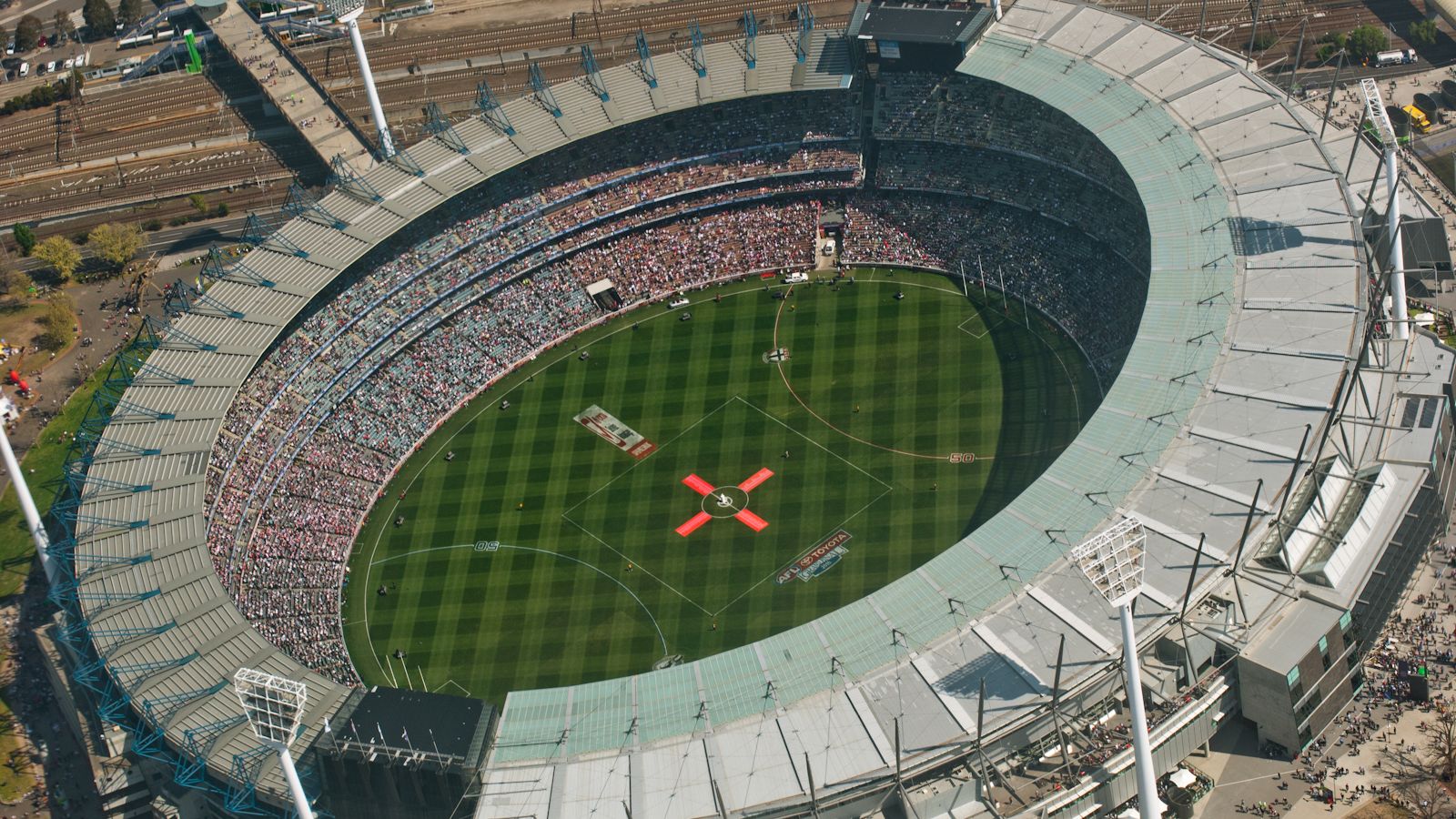
The AFL decides its premiership with a knockout finals series played after the home-and-away season. For 26 seasons, from 2000 to 2025, that series involved the top eight clubs on the ladder. From 2026 the league expanded it to ten clubs by adding a wildcard round at the front, but the four weeks that follow still run on the final eight bracket. To understand the current system, you need to understand the eight first.
The final eight, 2000 to 2025
The eight finalists split into two groups. The top four play the qualifying finals and the bottom four play the elimination finals, and the names describe what is at stake.
In week one, 1st hosts 4th and 2nd hosts 3rd in the two qualifying finals. The winners skip a week and go straight to a home preliminary final. The losers stay alive and host a semi-final the following week. In the elimination finals, 5th hosts 8th and 6th hosts 7th. The winners move on to an away semi-final, and the losers are out.
In week two, each qualifying final loser hosts an elimination final winner in a semi-final. Week three brings the two preliminary finals, where the qualifying final winners host the semi-final winners. The two preliminary final winners meet in the Grand Final in week four.
The AFL calls the two games just before the Grand Final preliminary finals, and the two before those semi-finals. That naming comes from the older McIntyre systems and confuses people who follow other sports, where a semi-final usually means the last round before the decider.
The double chance
A top-four finish carries the double chance. Because a qualifying final cannot knock anyone out, a top-four side can lose in week one and still reach the Grand Final by winning its next two matches. Clubs from 5th to 8th have no such cushion and must win every final they play.
Ladder position also decides who plays at home. Under the final eight, the top two clubs hosted their first two finals. The clubs in 3rd and 4th travelled for the qualifying final and then hosted their next game. Fifth and 6th hosted an elimination final and then played away, while 7th and 8th played every final on the road and needed four straight wins to take the flag.
The pre-finals bye
Since the 2016 finals series, the AFL has left a week off between the last home-and-away round and the first week of finals. The league brought it in to encourage clubs to field their strongest sides in the final round, rather than resting players before September.
The bye has its critics. They argue it hurts the qualifying final winners, who already get a week off before the preliminary finals. Those clubs won 94 per cent of preliminary finals from 2007 to 2015, and 55 per cent from 2016 to 2024.
The final ten, from 2026
The AFL announced the change in November 2025 and used it for the first time in the 2026 season. The league's stated aim was to keep more clubs in contention, and more matches meaningful, deeper into the home-and-away season.
The new first week, the wildcard round, sits in the slot the pre-finals bye used to fill. Only the clubs that finish 7th to 10th play. The top six have that week off.
| Week | Matches | What happens |
|---|---|---|
| Week 1: wildcard finals | 7th v 10th, 8th v 9th | Higher seed hosts. Winners advance, losers are out. The top six rest. |
| Week 2: qualifying and elimination finals | 1st v 4th, 2nd v 3rd; 5th v lower-ranked wildcard winner, 6th v higher-ranked wildcard winner | Qualifying final winners skip week 3. Qualifying final losers survive. Elimination final losers are out. |
| Week 3: semi-finals | Qualifying final losers v elimination final winners | Qualifying final losers host. Losers are out. |
| Week 4: preliminary finals | Qualifying final winners v semi-final winners | Qualifying final winners host. Losers are out. |
| Week 5: Grand Final | Preliminary final winners | Played at the MCG. |
Weeks two to five follow the same bracket as weeks one to four of the old final eight. The top four keep the double chance. Fifth and 6th keep what they had before, a home elimination final with no second life. The clubs in 7th and 8th now get a home final in the wildcard round, but they need five straight wins for the premiership instead of four. Ninth and 10th must win five finals in a row, all of them away.
The first final ten series ended with the Brisbane Lions beating Fremantle by seven points in the 2026 Grand Final, in front of a crowd of 100,023.
The Grand Final at the MCG
The Grand Final has been played at the Melbourne Cricket Ground in almost every season since 1902. Under the current agreement it will stay there every year until at least 2059, whichever states the two grand finalists come from. That means a club from Perth, Adelaide, Brisbane or Sydney plays the biggest game of its year in Melbourne. Our guide to the MCG covers the ground itself.
A short history of AFL finals systems
The competition has changed its finals format many times since the Victorian Football League began in 1897. In that first season the top four played a round robin.
- 1897: the top four played a round robin.
- 1898 to 1900: every club took part in the finals.
- 1901 to 1930: versions of the Argus system, with a top four.
- 1931 to 1971: the Page-McIntyre system, with a top four.
- 1972 to 1990: the McIntyre final five.
- 1991 to 1993: two versions of the McIntyre final six.
- 1994 to 1999: the McIntyre final eight.
- 2000 to 2025: the AFL final eight described above.
- 2026 onwards: the AFL final ten.
The AFL designed the 2000 system to fix problems people had found with the McIntyre final eight, which it had used for six seasons. The same bracket spread to other codes. The NRL adopted it in 2012, as our NRL finals explainer shows, and the Victorian Football League moved to a final ten in 2023, three years before the AFL did.
Spotted a mistake? Email [email protected] and we will correct it.