The MCG: a guide to the Melbourne Cricket Ground
Opened in 1853, the MCG hosts the AFL Grand Final and the Boxing Day Test. Its history, stands, record crowds and the stations that serve it.
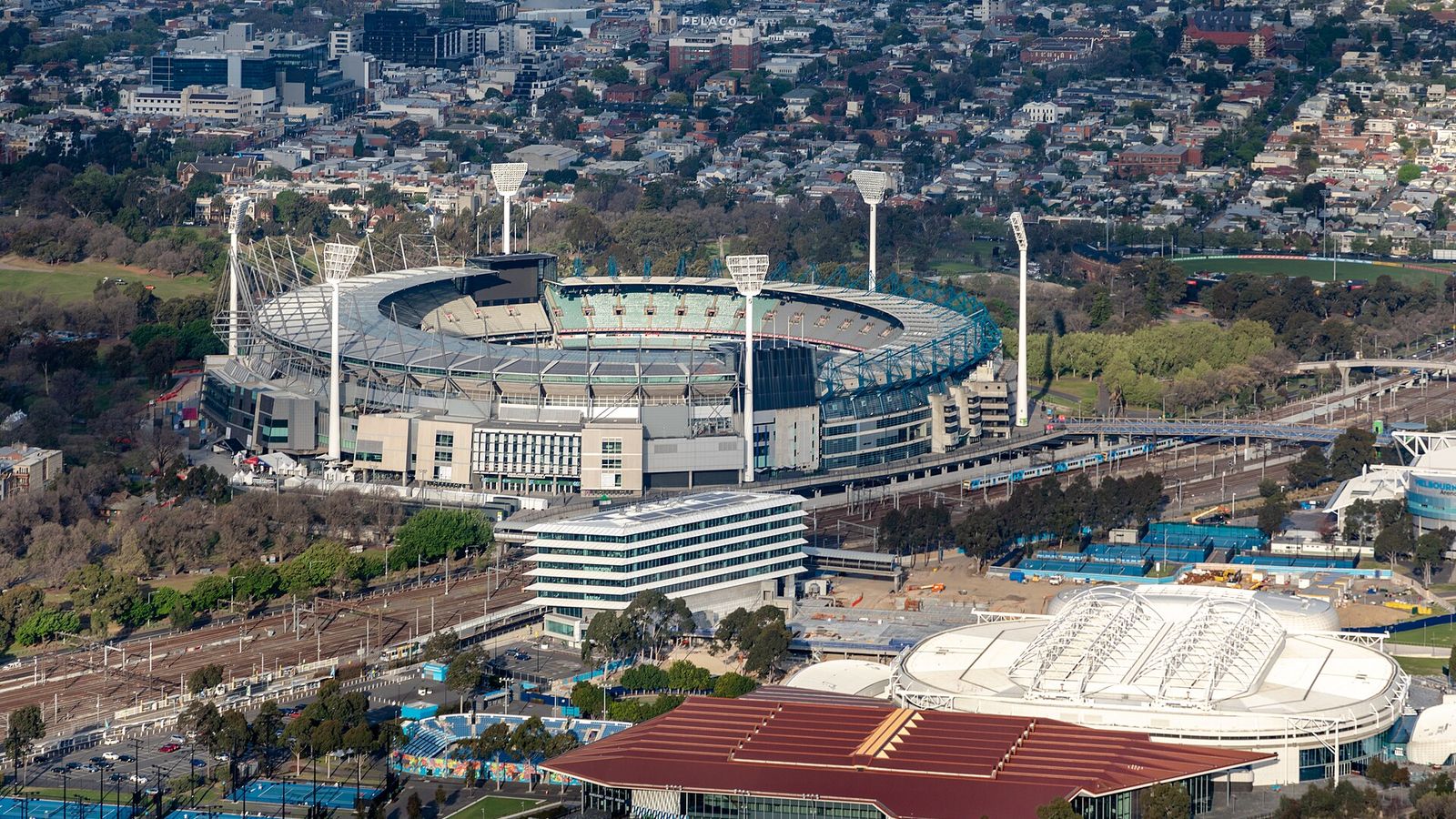
The Melbourne Cricket Ground, known as the MCG or simply "the 'G", is the home of the AFL Grand Final and the Boxing Day Test. It sits in Yarra Park in East Melbourne, at 120 Barassi Way. The Victorian Government owns it through the MCG Trust, and the Melbourne Cricket Club runs it.
How the ground began
The Melbourne Cricket Club moved several times in its early years. Flooding drove it from its first ground on the south bank of the Yarra, and railway works later pushed it out of South Melbourne. Governor La Trobe offered the club three sites, and it chose a ten-acre section of the Government Paddock at Richmond. The sub-committee liked the spot because it was level enough for cricket but sloped enough to avoid flooding.
The ground opened on 23 September 1853. A wooden members' stand went up in 1854, and the first public grandstand, a temporary structure seating 6,000, followed in 1861. The original land grant allowed only cricket, a condition that technically stayed in place until 1933.
Football arrived nearby very early. The first documented match in the area, between Melbourne Grammar and Scotch College, began on 7 August 1858 in the parkland next to the cricket ground. Football was first played on the MCG itself in 1869, in a trial game involving a police team, and the first official match there came in 1879.
Cricket at the MCG
The first Test match ever played took place at the MCG from 15 to 19 March 1877. Australia beat England by 45 runs. The first one-day international was also played there, on 5 January 1971, when Australia beat England by five wickets.
The Boxing Day Test, starting on 26 December, has been held at the MCG every year since 1995. The ground has hosted two Cricket World Cup finals. Pakistan beat England in 1992, and in 2015 Australia beat New Zealand by seven wickets in front of 93,013 people. As of 2026, the cricket attendance record is 94,199, set on 26 December 2025 at an Australia v England Test.
Football and the Grand Final
The VFL and AFL Grand Final has been played at the MCG in almost every season since 1902. The ground is contracted to host it every year until 2059. The largest crowd in the ground's history came at a Grand Final: 121,696 people watched the 1970 VFL decider, long before the stadium was all-seated. Our AFL finals explainer covers how teams get there.
The MCG has also hosted State of Origin rugby league seven times. The first rugby union match on the ground was played on 29 June 1878.
The 1956 Olympics and other events
The MCG was the main stadium of the 1956 Melbourne Olympics. It hosted the opening and closing ceremonies, the athletics, and the hockey and football finals. About 103,000 people filled it on opening day. The Olympic Stand, built before the Games, raised its capacity. The ground also held a baseball exhibition during the Games with an estimated crowd of 114,000.
Fifty years later it hosted the opening and closing ceremonies and the athletics at the 2006 Commonwealth Games. During the Second World War the government requisitioned the ground for military use, and from 1942 to 1945 more than 200,000 American and Australian personnel were barracked there.
Concerts draw big crowds too. The concert record is 109,500, for an Ed Sheeran show.
Capacity and stands
As of 2026, the official capacity is 100,024: about 95,000 seats plus 5,000 standing room. The stadium is split into two main structures.
| Stand | Background |
|---|---|
| Shane Warne Stand | Opened as the Great Southern Stand in 1992 after inspections in 1988 found concrete cancer in the old stands. It cost $150 million and was renamed in 2022. |
| Members, Olympic and W.H. Ponsford stands | One continuous stand that replaced the 1928 Members stand, the 1956 Olympic stand and the 1968 Ponsford stand, which were demolished between late 2003 and 2005. It cost more than $400 million and was ready for the 2006 Commonwealth Games. |
The Australian Sports Museum is also housed at the ground. Light towers were installed in 1985, which made night football and day-night cricket possible, and LED lighting replaced the old system between November 2019 and February 2020.
The MCG was added to the Victorian Heritage Register in 2001 and the National Heritage List in 2005.
How to get there
Two railway stations serve the ground. Richmond station sits in Melbourne's sporting precinct and has ten platforms, with Alamein, Belgrave, Frankston, Glen Waverley, Lilydale and Sandringham line trains plus V/Line Gippsland services. A special-events entrance at its western end opens during MCG events, and the same station serves Melbourne Park and AAMI Park.
Jolimont station, on Wellington Parade in East Melbourne, is on the Mernda and Hurstbridge lines. Extra exit gates open there on MCG event days to ease crowding.
Tram and bus services also run to the ground.
For the dates of the big MCG fixtures each year, see our Australian sports calendar.
Spotted a mistake? Email [email protected] and we will correct it.